Sunday, April 28, 2013

Media played a crucial role in the popularity of the Patriot cause in the American Revolution

The American Revolution is an event in our country's history that every student comes across at some point in their education. They learn about the patriots, the loyalists, Thomas Jefferson, John Adams, and George Washington and that there was an American victory. The most important aspect--the patriots--is glossed over. The American Revolution is often categorized by just a small group of elite names, but there was a much larger faction that gave the Founding Fathers the power to help formalize a revolution. They needed the fuel of the common people. The average farmer, shopkeeper, artisan, and merchant had a knowledge of what was going on around them because of the media. Newspapers, pamphlets, and other print media kept patriots of all classes throughout the colonies informed on the events of what became the American Revolution.


Most of the events that led to the Revolutionary war were in a centralized area.
Boston, Massachusetts faced the most oppression by the British government. The British quartered troops in Boston citizens' homes, closed their port, and stationed thousands of soldiers in the streets. Boston was were all of the action was. The Boston Tea Party and the Boston Massacre were major turning points in the Revolution. The people of Boston had a front row seat to the drama that happened in the city. The rest of the colonies, however, did not. Without newspapers, no one outside of Boston would have known what was happening. Lindy Cummings, a University of Maryland graduate student concentrating in colonial American history, goes as far to assert that there would not have been a revolution without newspapers. A lack of newspapers would have led to a chain of events that would now be called "The Boston Riots."


Print media created a popular base for the American Revolution to stand on because it could be accessed from any location. 
Cummings states that in other revolutions, there was always a central figure, such a King, for the regular Joe to support. The American Colonies lacked this quality since they were part of the British government. There was no one main leader of the patriot cause. Still, it became popular. This is because news traveled through newspapers and pamphlets. People in Georgia could feel the anger of the Bostonians simply by reading the daily paper. Newspapers assured that everyone in the colonies could feel a sense of fraternity and rallied them behind the patriot cause.


Taverns, churches, and word of mouth allowed the illiterate to access news, as well. 
A great number of colonists could not read, but that did not stop them from being Yankees. Taverns were a great place to discuss politics. For those who could read, newspaper articles were often tacked up all over the walls. Those who couldn't were cultured by participating in toasts that cursed King George III and cheered the patriot cause or simply join in on conversations. Also, portions of articles were sometimes read aloud. Similarly, church was a social venue where the illiterate learned about the revolution. Even if a person did not go to taverns or attend church, he could hear news from someone on the street.

Beyond newspapers, imagery in everyday objects was used to spread the American identity.
Cummings discusses how people may be surprised to learn that "members of the first Congress set out using print culture to shape a specific identity of not British citizens, but United States citizens." There was a time when the colonists wanted to be associated with the British very badly. They asserted British pride by dressing like them and buying the finest goods from London. Once the United States was officially independent, the divide was made clear to everyone by way of putting patriotic imagery on money, medals, and whatever else was manufactured. This created a sense of unity among rich and poor that the new nation needed as its backbone.


Print media reached a wide audience during the American Revolution and drummed up the support that the Revolution needed in order to be successful. 
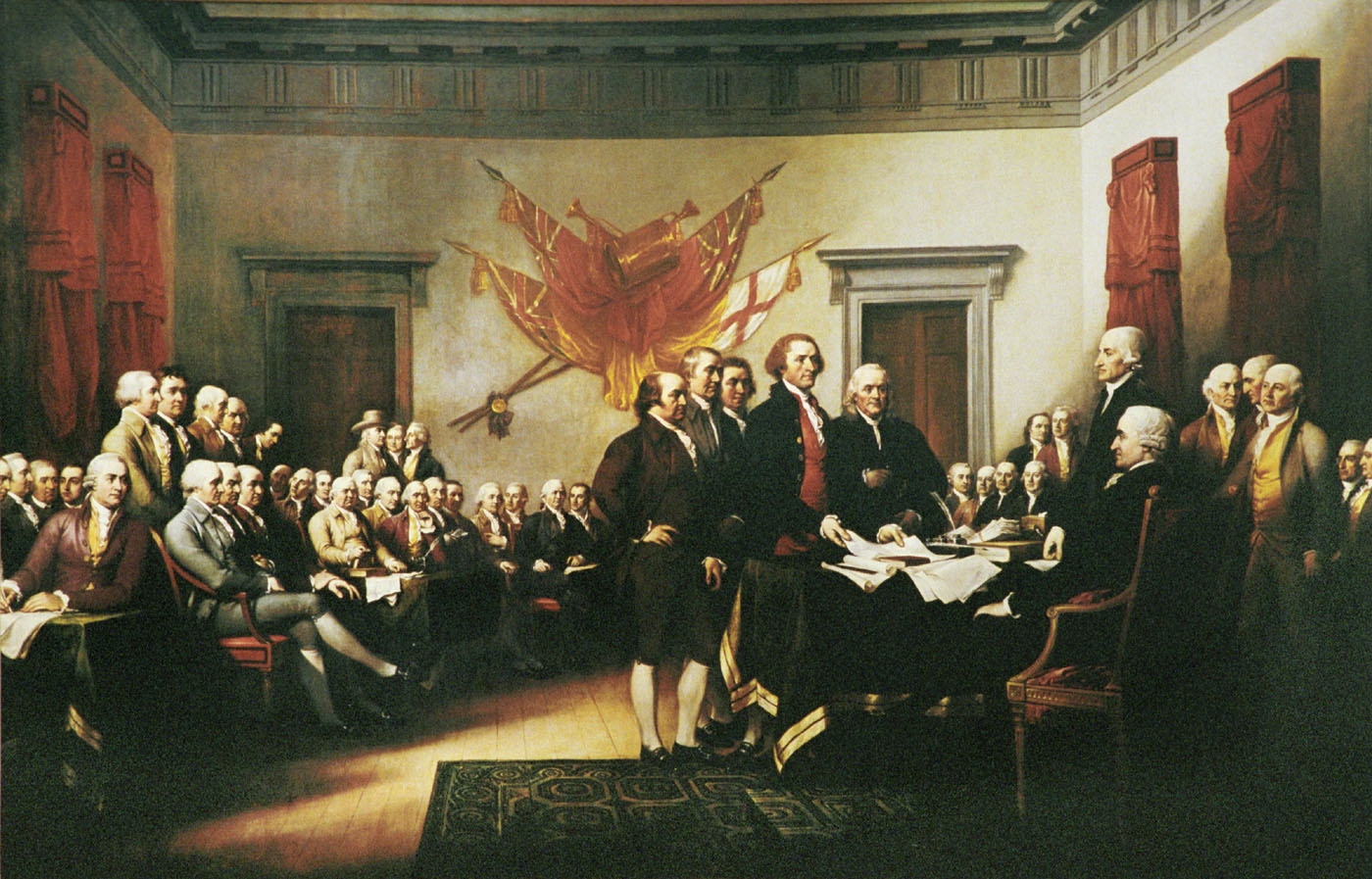
Thanks to the media, no matter where you were in the colonies and no matter what your occupation was, you were aware of the world around you. American colonists were heavily divided on a number of levels, but they could all unite in their patriot pride. Media in the American Revolution created this sense of pride that was essential to moving the Revolution forward. The Founding Fathers could never have signed the Declaration of Independence without support from the masses on the journey to freedom. 

Monday, April 22, 2013

Expert Lindy Cummings responds to questions about media during the American Revolution

Would there have been a Revolutionary War if there were no newspapers? What do you think is most surprising about media during the American Revolution?

Saturday, April 13, 2013

Media was crucial to the events of the America Revolution

When we think of the American Revolution, our minds naturally jump to the names Thomas Jefferson, George Washington, and other notables. It is easy to forget how many others were involved in the Revolution. They were all involved in very different ways than the names that we are all familiar with. In order for such great change to occur, there had to be a strong supporting base.

The lower classes heard about the events and ideologies of the American Revolution from the media. Newspapers, pamphlets, churches, and taverns were all significant ways in which regular townspeople received their news. Newspapers were the main channel. They came out on a daily basis, unlike today's papers. They were written passionately and patriotically to get their readers on board of the Yankee cause. Taverns were especially important for those who could not read because people could listen. Those who were literate read the news aloud so that even uneducated people could get involved with politics. Men in taverns also often toasted to the patriotic cause, exposing more illiterate people to the ideas. Additionally, newspapers were posted on the walls of taverns so people were constantly in touch with news.

Expert questions:

1. What would you say is the most surprising fact about how people received news during the American Revolution?
2. What do you think would have happened if there were no newspapers in the American Revolution? Would there still have been war?

Monday, March 4, 2013

Fiber optic technology is a revolution that has been a long time coming

In recent years, you may have been mystified by going to a neighbor's house and finding an unknown network provider on the television. You've seen Comcast and DirectTV, but the black and red guide of Verizon FiOS was unknown to you. FiOS may be the newest brand in the television business, but it has been a long time coming. Before delving into the history of fiber optic technology, it is crucial to understand how it works.

Fiber optics use light to transmit a message.

How this is done has changed over time, but the overarching theme remains the same. The technology has gone through heavy development to reach where it is today. Fiber-optic lines send information by using very highly concentrated light waves. The picture that you see on your Verizon FiOS television is the result of this process.

Fiber optic technology began with the development of the optical telegraph in 1794. 

The optical telegraph was created by French clergyman Claude Chappe and Austrian nobleman Abraham Niclas Edelcrantz in order to foster communicate across Europe, specifically Sweden and the countries surrounding it. Around the beginning of the nineteenth century, London began using the optical telegraph, as did Napoleon. They soon realized that it was not the most effective way to communicate. It was not practical to build the number of stations necessary to have successful long-distance communication. Additionally, their use was limited by the weather coniditions. The optical telegraph surfaced nearly a century before Samuel Morse invented the electromagnetic telegraph in 1837, which became much more widely used. Chappe and Edelcrantz did not hit the nail on the head as far as the telegraph business goes, but they did lay the foundation for fiber optic technology.

How did the optical telegraph work? It used a series of signaling stations. The stations all needed to be in sight of each other and were placed about a kilometer apart. An operator stood atop of each station and watched for signals from the nearest station. The signal given represented a word or number and presented in a series they created a message. The receiving operator would then send the message to the next station by presenting the same series of visual signals. The message was passed down the line of stations until it reached its destination, similar to playing the "telephone game." 

In the mid-twentieth century, scientists began to find ways to send light through the air. 

The main problem that fiber optic technology faced was that the light became diffused as it went through the air. Scientists tackled this problem in the 1950s and 60s. Prior to this time, they were working to concentrate and focus the light through glass tubes, but the light was leaking out. By the fifties and sixties, scientists found a way to reduce light leakage and keep the light within the boundaries of the container. Additionally, the laser was invented in 1960. These two events were revolutionary landmarks in the history of fiber optic technology. 

Today, fiber optics can send information one hundred miles without needing the signal to be strengthened. 

After the developments in the fifties and sixties, sending information long distances was still a problem. That was worked out by 1970 and today's fiber optic technology certainly does not face any such challenges. It moves information at the speed of light through glass or plastic fibers as thin as hair. The information can go one-hundred miles before it needs to be sent through something called a repeater to boost the signal. This is an amazing feat, especially when you compare it to the optical telegraph in 1794! 

The United States uses fiber optics to send information in nearly all of its major communication lines

What started off as rejected technology in eighteenth century Europe has been developed into a technology that dominates today's communication. Fiber optics is the fastest means of sending information, faster than commonly used copper wires. Therefore, it is also more expensive. Most homes receive do not have their own fiber optic line. The fiber optic line goes to a switching station which sends information to homes via the slower but less expensive copper wire. It will not be long before this changes. Verizon FiOS gives a fiber optic line to each home it provides service to. And it isn't that uncommon to see FiOS instead of Comcast or Direct TV anymore, is it? 

Friday, February 1, 2013

Media is heading into the hands of the few

As the world becomes increasingly digitized, the media is becoming more commercialized and centrally controlled.
Most media companies exist not because they want to bring people news and entertainment, but because they want to profit from doing so. It seems that every time the television is on the commercial breaks are longer and longer. Hulu, which started off completely uninterrupted by advertisements, now shows commercial breaks up to three minutes long during its videos. Try watching an episode of Modern Family to see for yourself. A twenty-minute episode is turned into a thirty-minute affair by lengthy ads. It is clear whose interest is at heart here--the companies'.

AOL recently bought the Huffington Post.
Struggles in the print media business contribute to consolidation. 
Newspapers are disappearing from doorsteps day by day as people increasingly rely on the internet. If no print media is sold and no print advertisements are successful, the companies face a struggle. These companies often are bought out--and here begins the consolidation process. This is not only the case with print media. Larger online companies are buying out smaller ones. For example, AOL took the Huffington Post, one of the most popular online blogs, under its wings in 2010. Similarly, YouTube now belongs to Google and NBC to Comcast. These are all examples of how the media is an oligopoly, where the power is in the hands of the few. The steps to producing good media are just too expensive for small companies.

Media consolidation impacts media users. 
Do not expect the lengthy commercial breaks to go away, unless you decide to pay a monthly fee for HuluPlus or Netflix. The fact is that making a profit is the priority of the mega companies. Also, the organization change means that how people get their media will change. Now, everyone has the option of watching television on a TV itself, on a laptop, a tablet, or even a phone. Smart phones are being used to access media of all kinds. This change is more convenient for users, but it has more effects than people realize. As people opt for watching their television online, fewer people are seeing the advertisements on cable. Digital journalists and print journalists are being merged into one profession as the print media decline continues, so all journalists now must be able to use audio and video to report as well as being able to write a story. A decision as simple as where to retrieve the news or watch the latest episode of Downton Abbey has a great effect on media companies.

The Information Age has transformed the media world for better and for worse. Oligopolies are the way business is being conducted now and whether consumers like it or not, the big business is here to stay.